
Progmat and Digital Asset Sign MOU to Tokenize Japanese Government Bonds on Canton for 24/7 Settlement
- ▸
Progmat and Digital Asset Holdings signed an MOU for a strategic partnership to bring trading and settlement of real-world assets, including Japanese government bonds, on-chain via the Canton Network.
- ▸
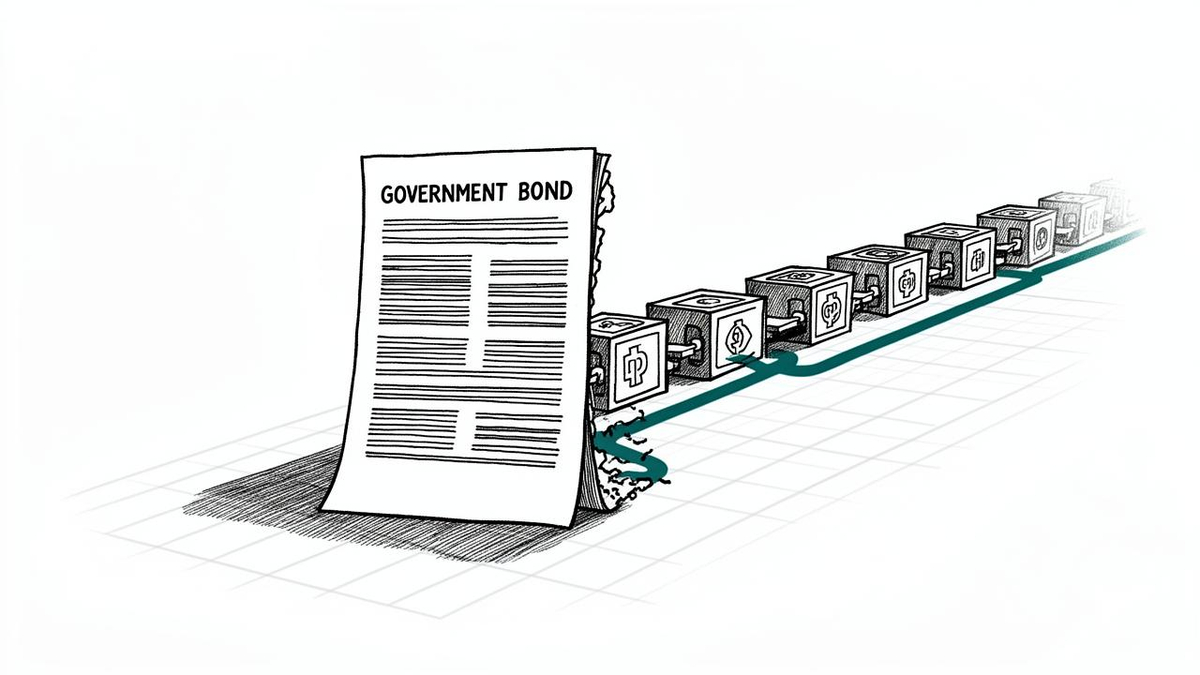
The first phase makes the Progmat issuance and management platform compatible with Canton and aims to realize 'tJGB', a token preserving the legal characteristics of book-entry government bonds, integrated with the transfer account book.
- ▸
The firms target 24/7 settlement and cross-border repo and collateral transactions, easing constraints from existing settlement infrastructure operating hours.
- ▸
The Digital Asset Co-Creation Consortium working group, with more than 68 organizations, plans to move to live-system verification around November, covering tJGB, tokenized deposits, and stablecoins on Canton.
- ▸
On August 13, four companies including MUFG announced proof-of-concept work with Progmat and Digital Asset on JGB repo transactions using Canton, testing DvP settlement and on-chain processing of the full repo workflow.
- ▸
Progmat migrated from Corda 5 to Avalanche L1 (announced July 13), and handles 51 of 103 disclosed domestic security token deals, with over ¥290.6 billion in value.
Progmat and Digital Asset Reach Basic Agreement on Tokenizing Japanese Government Bonds, Eyeing 24/7 Settlement
Progmat and U.S.-based Digital Asset Holdings have signed a memorandum of understanding for a strategic partnership to bring trading and settlement of real-world assets, including Japanese government bonds, on-chain. Leveraging the Canton Network, they aim to realize "tJGB," a token that preserves the legal characteristics of book-entry government bonds. They will advance integration with the transfer account book, with an eye toward 24/7 settlement and cross-border repo transactions. The DCC working group plans to move to live-system verification around November, and four companies including MUFG will also collaborate on repo transaction proof-of-concept work.
Progmat Digital Asset Holdings Canton Network Japanese Government Bonds (JGBs) tJGB Digital Asset Co-Creation Consortium (DCC) Mitsubishi UFJ Financial Group (MUFG) Transfer Account Book Avalanche L1 Repo Transactions
Progmat and U.S.-based Digital Asset Holdings have signed a memorandum of understanding (MOU) for a strategic partnership aimed at bringing trading and settlement of real-world assets (RWA), including Japanese government bonds (JGBs), on-chain. A formal announcement is scheduled for November 10, with the two firms centering the effort on the Canton Network, an institutional-investor blockchain developed by Digital Asset, to advance bond tokenization and upgrade settlement infrastructure.
As the first phase of the partnership, Progmat's digital asset issuance and management platform "Progmat" will be made compatible with the Canton Network. The companies aim to realize "tJGB," which tokenizes government bonds while preserving their legal characteristics as book-entry government bonds, and will advance integration with the transfer account book. They have also begun considering services that would make it easier for financial institutions to use Canton nodes, and plan to sequentially expand collaboration with financial institutions interested in conducting proof-of-concept work.
Rights to government bonds are currently transferred under Japan's Act on Book-Entry Transfer of Corporate Bonds, Shares, etc. (the Book-Entry Transfer Act) through records in the transfer account books maintained by transfer institutions and account management institutions such as securities firms and banks. The tJGB concept would maintain these legal characteristics and settlement finality while treating government bonds as tokens on a blockchain, enabling programmatically controlled 24/7 settlement. The two firms aim to use this mechanism for cross-border repo transactions and collateral transactions involving Japanese government bonds, seeking to ease constraints imposed by the operating hours of existing settlement infrastructure. Repo transactions involve exchanging securities such as government bonds for cash over a set period and are used for short-term funding and other purposes.
Behind the move is progress in discussions at the Digital Asset Co-Creation Consortium (DCC), which Progmat hosts. In May, the DCC established a working group (WG) to study tokenization of Japanese government bonds and on-chain repo transactions, with more than 68 organizations in Japan and abroad joining the joint study. Digital Asset has participated since the group's inception. Progmat published an interim summary of the study results on October 22, and the WG plans to move to live-system verification around November. It will prepare an environment in which tJGB, tokenized deposits, and stablecoins can be issued and managed on Canton for verification purposes, and will sequentially link with multiple repo transaction and collateral management platforms in Japan and abroad.
Financial institutions are also moving. On August 13, four companies including Mitsubishi UFJ Financial Group (MUFG) announced they would collaborate with Progmat and Digital Asset on proof-of-concept work for Japanese government bond repo transactions using Canton. The verification will test delivery-versus-payment (DvP) settlement, in which the transfer of Japanese government bonds and payment via digital money occur simultaneously, as well as a mechanism for processing the entire series of repo transaction steps on-chain.
Progmat claims the top share of Japan's domestic security token (ST) issuance platforms. By its own tally, it handles 51 of 103 publicly disclosed ST deals and, by value, more than ¥290.6 billion (approximately $1.8 billion) of more than ¥470.3 billion (approximately $3.0 billion). For its underlying technology it currently uses "Avalanche L1," and on July 13 it announced the completion of its migration from "Corda 5." The Canton integration positions the company to extend its target assets to government bonds while also pursuing commonality with its existing digital securities functions.
Going forward, the two firms will consider building services to support financial institutions' use of Canton nodes. They plan to sequentially expand collaboration with financial institutions seeking to conduct verification and to test the linkage between the transfer account book and on-chain data as well as tJGB trading and settlement. With an eye toward commercializing services for domestic and overseas market participants such as banks, trust banks, securities firms, and money market brokers, they aim to expand the tJGB trading and settlement network. They plan to disclose WG study results, individual verification results, and the service roadmap as appropriate while in dialogue with relevant authorities.
Japanese government bonds represent one of the world's largest bond markets, and if trading and settlement can be brought on-chain, the efficiency of repo transactions and collateral management could change significantly. With competition among domestic ST issuance platforms continuing, tokenizing government bonds—a large-volume asset—is likely to influence financial institutions' choice of blockchain platforms. The focus going forward will be on the progress of live-system verification and on how legal consistency with the transfer account book will be ensured.
Add preferred source Like Favorite Share